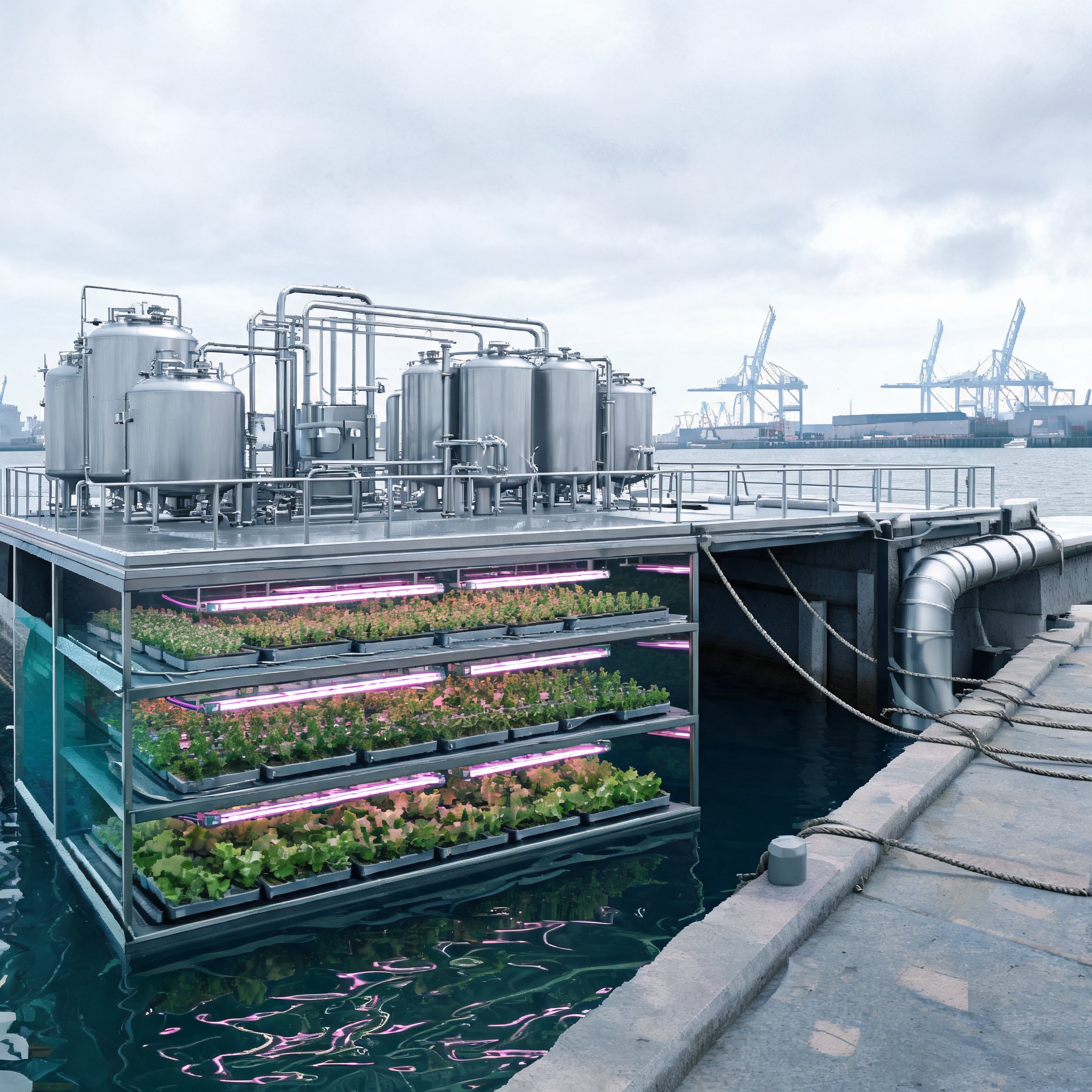
A floating dairy farm in the Port of Rotterdam has changed direction again: instead of being sold, the platform will keep processing milk, but its herd has been relocated and the space below the waterline is now given over to a vertical salad and herb operation.
The shift follows a dispute with the local environmental department, which ruled that a newly fitted floor did not comply with Dutch regulations. The farm was subsequently put up for sale, the 28 resident Dutch MRI cows were taken off and earmarked for sale, and milk production was due to stop. Owner Peter van Wingerden now says neither the sale nor the shutdown is going ahead.
Cows moved, milk still processed
The cows have been transported to several farms about 20km from the port. Milk is now brought in rather than produced on board: a stainless steel pipeline runs from the quay to the farm, and a regular dairy truck delivers roughly 1,500L per batch twice a week. Van Wingerden said the 20km distance means transport time is short.
He attributed the regulatory problem to the flooring rather than to the operating system, noting that the rubber floor is German-made and holds no certificate of compliance in the Netherlands. He also said the farm has the lowest emissions possible given its modern technology and system — a company claim rather than an independently verified figure.
Vertical unit below the waterline
The basement of the floating structure houses a fully controlled and automated growing space built as three layers with conveyor belts, combining grow-room and warehouse technology. Because it sits below the waterline it is cooled by the surrounding water, and Van Wingerden said it is performing well.
- Micro-greens: harvested every two weeks
- Herbs: harvested every three weeks
- Leafy greens: harvested every four weeks
- Edible flowers: harvested every four to five weeks
These crops are turned into tea, pesto, herb-infused salts and herb-infused whey, alongside Parmigiano cheese.
Original vision and a fixed deadline
The Floating Farm was conceived by Peter and Minke van Wingerden, who invested €4 million in on-site feeding, milking, slurry handling and dairy production. It opened in May 2019 as an attempt to produce food sustainably without a conventional land footprint, selling milk and dairy products to local consumers through vending machines at the port. The concept drew hundreds of thousands of curious visitors from around the world.
The arrangement is temporary whatever the regulatory outcome: Van Wingerden said the farm will have to leave the port in just over two years because the entire area is to become residential. “This is not the vision we initially started off with, but we are coping with this system,” he said.