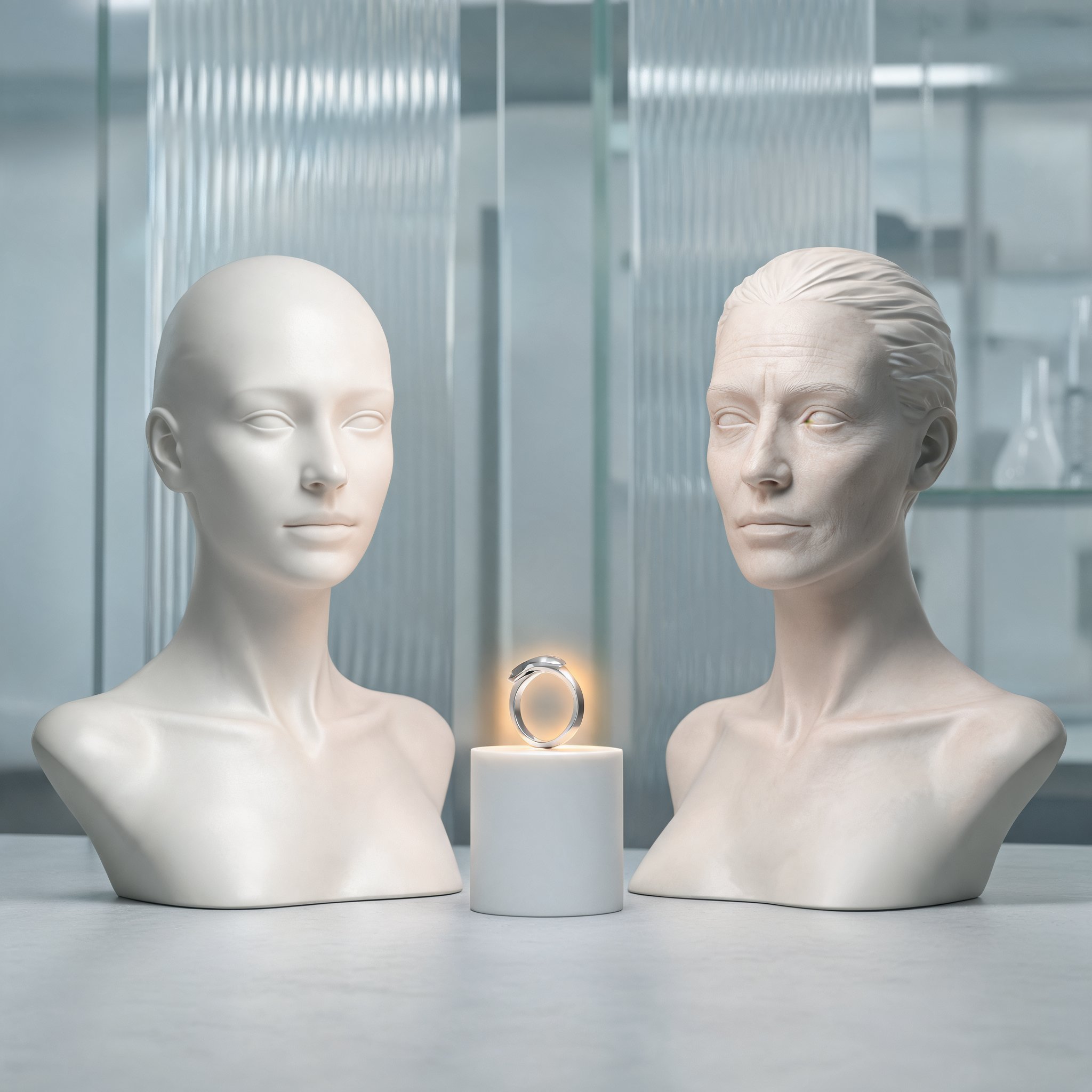
RoC Skincare is testing its Patented Clinical Retinol on adult female identical twins, pairing conventional clinical skin measurements with lifestyle biometric data gathered by Oura Rings. The brand says a completed pilot has convinced it the twin model is workable and is now recruiting for a larger, 12-week phase.
Why the twin model
Art Pellegrino, chief scientific officer at RoC Skincare, says the appeal of identical twins is that they begin with the same genetic starting point. When two people share that blueprint, differences between them are harder to write off as inherited, which makes it easier to see what a formulation is doing on the skin.
He describes identical twins as close to a natural control group: if their skin ages along different paths, lifestyle and environment become the more plausible explanation. The pilot, he says, was designed to test whether that model could deliver a more precise way of studying what drives visible skin aging, and the answer was that it could.
Pilot findings
According to RoC, twins in the placebo arm finished the pilot with similar or worse signs of aging, while those in the treatment arm showed improvements of 20% or more within four weeks. Pellegrino is explicit that the pilot did not attempt to apportion skin aging between genes and daily life — that question belongs to the expanded study, which will examine how factors such as sleep and stress shift outcomes when genetics are held constant.
The next phase
RoC is recruiting at least 30 pairs of women aged 40 and over living in the US for a 12-week regimen. Pellegrino says the deliberately narrow group is intended to produce cleaner data, and that the work sits within a longer research program on “skin span” — how long skin keeps looking its best.
What the wearables capture
Participants are asked to wear an Oura Ring, which records health and wellness metrics around the clock. The study draws on:
- sleep duration and quality
- stress indicators
- heart rate and heart rate variability
- temperature trends
Pellegrino argues wearables open a practical route to factoring how people actually live into skin care recommendations. Because identical external conditions — the same sun exposure or an identical diet — cannot be guaranteed, RoC is recruiting twins with broadly similar levels of environmental damage wherever possible and monitoring sleep and stress throughout.
That enables sister-to-sister comparison. If one twin sleeps poorly or reports more stress, researchers can check whether her skin responds differently to the regimen than her sibling's — for instance, whether stretches of bad sleep coincide with lower hydration readings, or whether the twin under less stress sees fine lines soften sooner. RoC is also interested in the reverse direction: whether visible improvement leaves participants feeling less stressed.
Measurement and timing
Skin changes are assessed through expert grading, digital photography, corneometer readings and participants' own assessments. Pellegrino says the findings will inform how RoC develops products aimed at skin longevity and how it designs future clinical work. Results from the expanded twin study are expected by mid-2027.