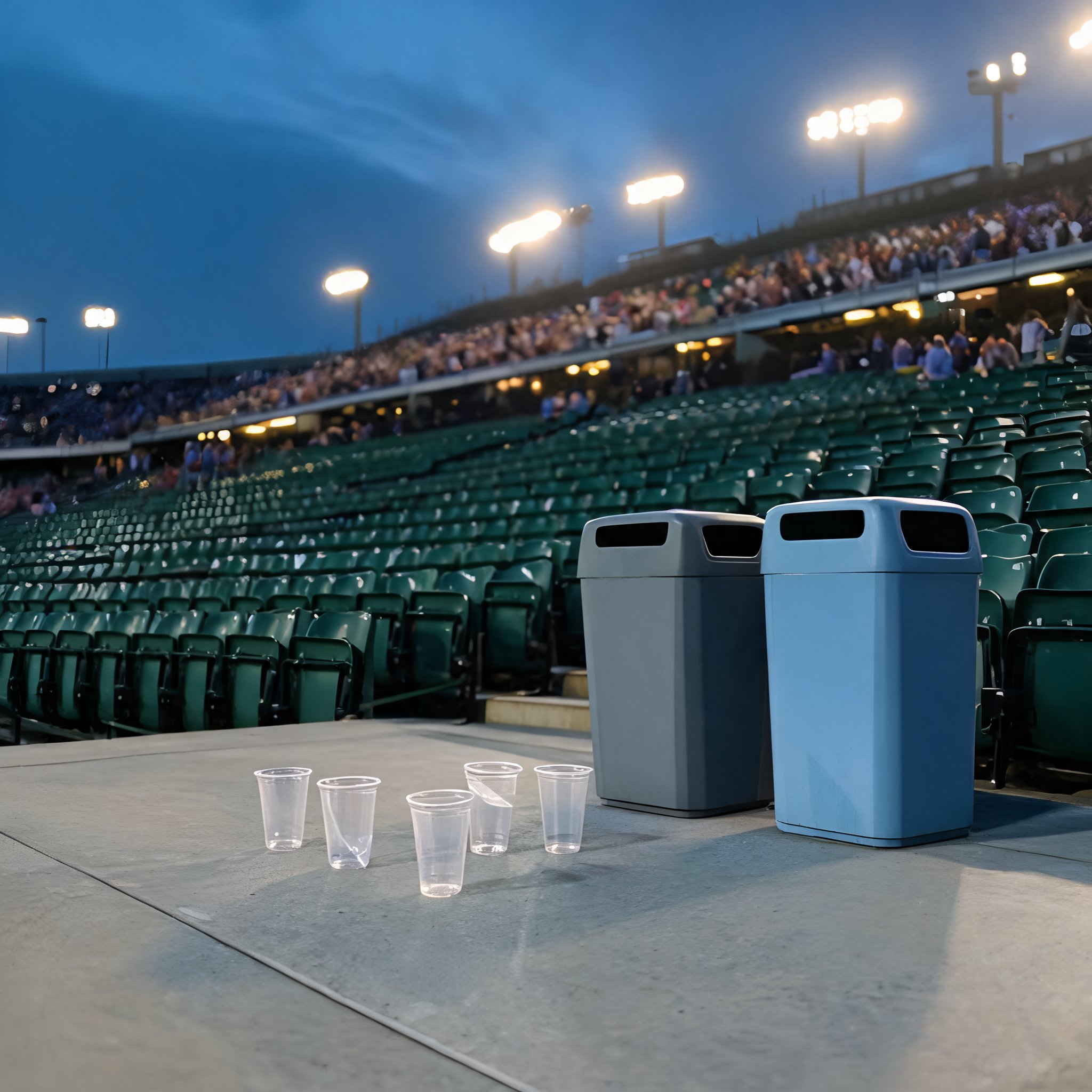
Liverpool supporters found an unexpected source of cash during their Champions League visit to Austria, collecting discarded reusable drinking cups at LASK’s stadium so they could claim the deposit cashback.
Reports described fans spending part of the evening and the period after the match gathering cups from stands and concourses. The cups carried a return value under the Austrian club’s deposit system, turning abandoned beer cups into money for those who retrieved them.
LASK has promoted a plastic-free stadium model and uses deposits to encourage the return of reusable containers. In practice, the system gives spectators a direct financial reason to bring cups back rather than leave them behind. At the Champions League match, that incentive appears to have extended beyond ordinary spectatorship, with visiting fans treating cup collection as a sideline.
The episode places stadium waste management in a broader debate over circular economy in football. UEFA says it is placing greater emphasis on circular-economy measures at its club competitions. Liverpool has also publicised its own recycling record at Anfield, stating that more than one million plastic bottles have been recycled there over the past three seasons.
Those claims are separate from the Austrian cup-return scheme, but they show how clubs are presenting waste reduction and recycling as part of their environmental messaging. The LASK system relies on reusable containers and a deposit that is refunded on return. Its effectiveness depends on fans returning cups through the intended channels; the Liverpool supporters’ cup-gathering shows how a deposit can also create an informal recovery route, with cashback as the visible incentive.
The club has not been described as introducing a new scheme for the match, and no figures were provided for how many cups were returned or how much money fans collected. The available details focus on the deposit mechanism and the supporters’ response. Still, the scene illustrates a practical point about deposit systems: a small refund can change behaviour, especially when large numbers of containers are left in stands and concourses after a match.