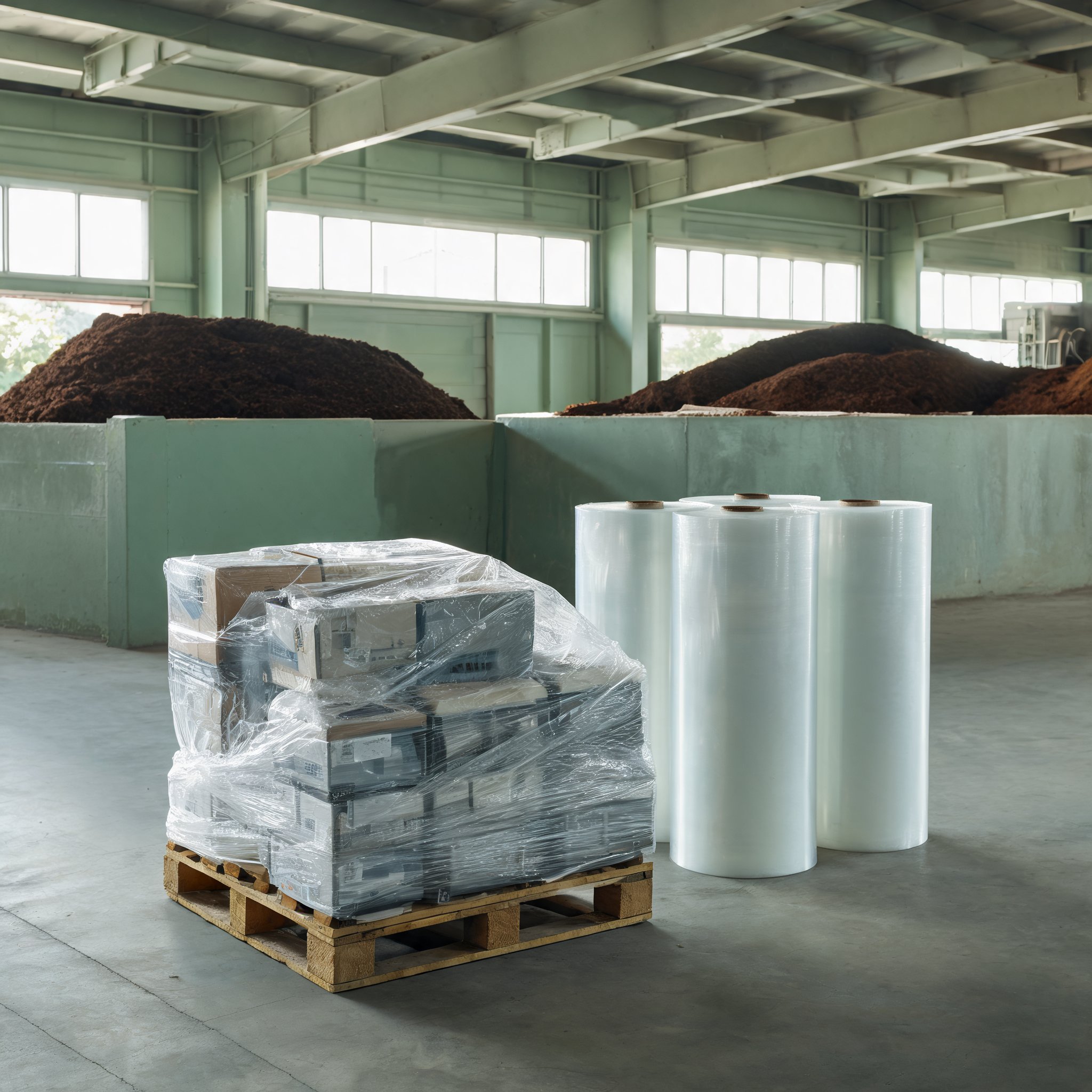
EcoCortec, the European subsidiary of Cortec Corporation, has developed two certified compostable packaging films for heavy-duty industrial use. The films, EcoShrink and EcoWrap, are manufactured at the company’s facility in Croatia and are positioned as direct replacements for conventional polyethylene in load containment and inventory staging.
The company says the products address a persistent problem in manufacturing and logistics: single-use polyethylene stretch and shrink film is widely used for pallet loads and temporary storage, but much of it is not recyclable. Rising disposal fees, carbon reporting requirements and regional plastic surcharges are increasing pressure on plant managers to find bio-based alternatives that can run on existing packaging lines.
Earlier bio-based films often lacked the mechanical strength needed for automated pallet wrappers, leading to tears and load failures in transit, according to the company. EcoCortec says its films are designed to retain performance on standard wrapping equipment without requiring machine retrofits or changes to packaging workflows.
EcoShrink for heat-shrink protection
EcoShrink is intended for heat-shrinking oversized equipment and smaller components. The film is formulated with 45 percent biopolymers sourced from certified commercially compostable resins. When standard heat is applied, it shrinks evenly to form a protective barrier that seals out dust, dirt and moisture during transit and extended outdoor yard storage.
EcoCortec says the film remains structurally stable under normal storage conditions and begins breaking down only when exposed to an industrial composting environment. That distinction is important for industrial users that need packaging to retain shelf life before use but still want an end-of-life route other than landfill.
EcoWrap for pallet loads
EcoWrap is designed for palletizing and cargo bundling. EcoCortec describes it as the first commercially available compostable, industrial-strength stretch film. It is certified “OK compost INDUSTRIAL” by TÜV Austria under EN 13432 and ASTM D6400.
The film uses a specialized tackifier formulation intended to overcome common bioplastic performance limits. According to the company, this provides the cling and stretch elasticity needed for standard automated wrapping equipment. Its high tensile strength allows operators to secure heavy pallet loads with fewer wraps than conventional stretch film, which the company says can reduce material consumption per shipment and help mitigate plastic taxes and landfill surcharges.
EcoWrap is designed for commercial composting facilities, where it is intended to break down alongside organic waste into nutrient-rich soil for agricultural use. The availability of local commercial composting therefore remains a practical condition for capturing the claimed end-of-life benefit.
Applications and trade-offs
The films are applicable across manufacturing, e-commerce, agriculture and logistics operations. EcoCortec presents them as a scalable alternative to conventional polyethylene films, allowing packaging engineers and logistics managers to route used film to commercial composting instead of waste compactors.
The company says this can help operations pursue corporate waste-reduction targets without compromising load integrity or shipping protection. The claims rest on the films’ certified compostability, compatibility with existing wrapping equipment and mechanical performance; actual results will depend on the specific load, wrapping process and access to suitable composting infrastructure.