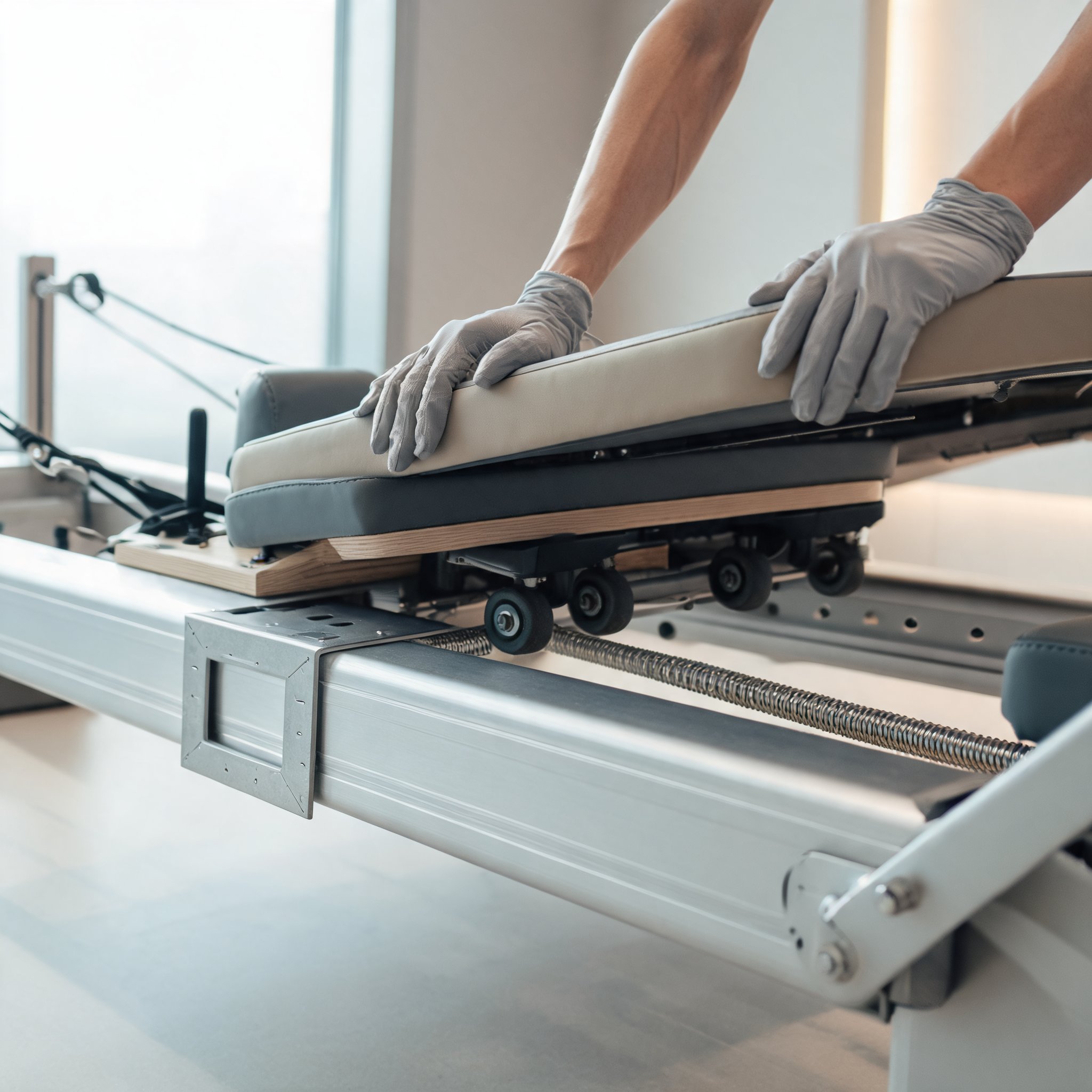
Commercial demand for Pilates reformers is rising across Europe, North America and Asia-Pacific after major fitness trade gatherings such as FIBO, with lightweight aluminium models attracting attention from studios and gym operators. As buyers compare more machines, Shenzhen Ruiteng Sports Technology Co., Ltd. is promoting its RINTELN basic aluminium reformer line as a CE-certified option for professional studios, commercial gyms and rehabilitation academies.
The company, established in 2021, says the line is built around high-grade anodised aluminium profiles and is available in silver and black finishes. It is positioning the equipment for high-traffic group studio environments, where structural rigidity, carriage movement and long-term resistance stability are central purchasing concerns.
Buyers shift from appearance to verification
Procurement teams are being urged to look beyond cosmetic finishes and low upfront prices. Common concerns cited for low-cost machines include noisy carriage tracking, frame deflection under dynamic body loads, premature spring-tension fatigue and rapid roller-wheel deformation. Such failures can interrupt group sessions, affect user safety and raise maintenance costs.
- Safety compliance: verifiable CE certification is non-negotiable for commercial operation, with European import rules and commercial insurance policies requiring it to support dynamic load safety and structural integrity.
- Carriage mechanics: precise linear movement matters; generic industrial bearings and unrefined plastic wheels can produce track friction, uneven glide and mechanical lag under heavier users.
- Spring metallurgy: low-quality steel springs can lose calibrated tension quickly and risk structural fatigue during high-extension exercises.
- Supply-chain flexibility: rigid order minimums, limited frame colours and long lead times can hinder franchise scaling and custom studio concepts.
Manufacturer details
RINTELN says it integrates German-imported springs and original German sealed bearings into the reformer’s core assembly. The springs are intended to deliver consistent tension and resist metal fatigue over tens of thousands of cycles, while the sealed bearings are designed to reduce rotational friction and support smooth kinetic feedback during high-intensity sessions. These are manufacturer claims rather than independently verified performance results.
For carriage engineering, an internal 11-person research team spent 180 days testing material formulations to develop a silent wheel assembly. The design combines a high-density, high-tensile polyurethane outer layer with concentric wheel construction, aiming to reduce carriage vibration, floor drag and track noise under maximum load. RINTELN applies the same approach across the basic aluminium line.
Low-MOQ sourcing and customisation
The company offers a one-piece minimum order quantity, allowing international buyers to order an evaluation sample before bulk purchases. It also provides 60 leather colours for upholstery and complimentary brand customisation, including laser logos on aluminium frames and embroidery on wristbands and ankle straps. Standard production is quoted at seven to 20 days, depending on customisation and volume.
Warranty and support
RINTELN backs the commercial line with a five-year structural warranty and ships high-wear replacement parts alongside initial machine orders. Technical support teams provide instructional video tutorials to help facility managers replace components. The company says this framework is intended to reduce downtime and protect equipment investment over years of heavy commercial use.
For buyers, the broader lesson is that aluminium reformers should be assessed on compliance, carriage mechanics, spring quality and supply terms, not frame appearance alone. RINTELN’s low-MOQ model gives distributors and studio operators a way to inspect those details before committing to larger orders, although final purchasing decisions should rely on documented certification and hands-on evaluation of sample units.